
Buying Trailer Parts Online vs. From a Local Dealer: Fit, Compatibility, and Support
Buying trailer parts online can be convenient, especially when you know the exact part number and need the product shipped to your door. A local dealer is often the safer choice when fit, compatibility, installation, or timing is uncertain. The best option depends less on where the part is sold and more on how much information you can verify before buying.
For trailer owners in and around Gresham and Portland, Dayspring Trailers offers both an online parts store and a local parts department. That gives you a useful middle ground: research products online, then request help or arrange pickup when a part needs closer review. Use the steps below to decide which buying method makes sense for your repair or upgrade.
When Buying Trailer Parts Online Makes Sense
Online shopping works well when the replacement is clearly identified and the consequences of a mismatch are limited. It can save a trip, make it easier to compare brands, and provide access to parts that may not be sitting on a local shelf. Dayspring Trailers offers products shipped directly to your door through its online parts store, along with in-store pickup when available.
Convenience should not replace verification. A product photo, general description, or phrase such as “fits most trailers” is not enough for many safety-related or trailer-specific components. Before placing an order, collect the information needed to compare the listing with your existing part and the trailer manufacturer’s documentation.
Start with the part number and measurements
Look for a manufacturer part number, model number, serial number, or other identifying mark on the original component. Record the trailer make, model, year when known, and the component’s dimensions. Depending on the part, useful measurements may include length, width, bolt-hole spacing, wire count, connector style, shaft size, wheel dimensions, or mounting pattern.
Do not rely on appearance alone. Two jacks, lights, couplers, hubs, or brake components can look similar while using different mounting points or specifications. If the original part is unavailable, use the trailer identification plate and current manufacturer information instead of guessing from an image. When details remain unclear, pause the order and ask a parts professional to review what you have.
Check the whole system, not just one component
Compatibility often depends on the parts around the item. A replacement light must match the trailer’s wiring and connector arrangement. A brake component must correspond with the axle and braking system. A ball mount, hitch, wheel, tire, or coupler must suit the relevant size and rating requirements. A part can physically attach and still be wrong for the trailer’s load, connection, or operating system.
Write down the complete setup before shopping: trailer type, axle information, existing component details, tow vehicle connection, and the job you need the part to perform. Compare those details with the manufacturer’s specifications. If the listing does not provide enough information to make that comparison, treat the missing information as a reason to verify, not as permission to assume compatibility.
Review shipping, returns, and damage procedures
Online prices and availability are only part of the decision. Read the return conditions before buying, including whether opened or installed parts can be returned, who pays return shipping, and whether a restocking charge may apply. Save the order confirmation and product description so you can compare the delivered item with what you purchased.
Inspect shipped parts before installation. Look for bent brackets, cracked housings, damaged threads, missing hardware, or packaging damage. Photograph the package and part if something is wrong, then follow the seller’s documented claim process. Installing a damaged or incorrect part can make a return more difficult and may create a safety problem.
When a Local Dealer Is the Better Choice
A local dealer can be especially helpful when the part is difficult to identify, connected to a safety system, needed quickly, or likely to require installation. You can bring measurements, photos, the old component, or trailer information for a more useful conversation. The goal is not simply to buy locally; it is to reduce the chance of ordering a part that does not work with the trailer you actually own.
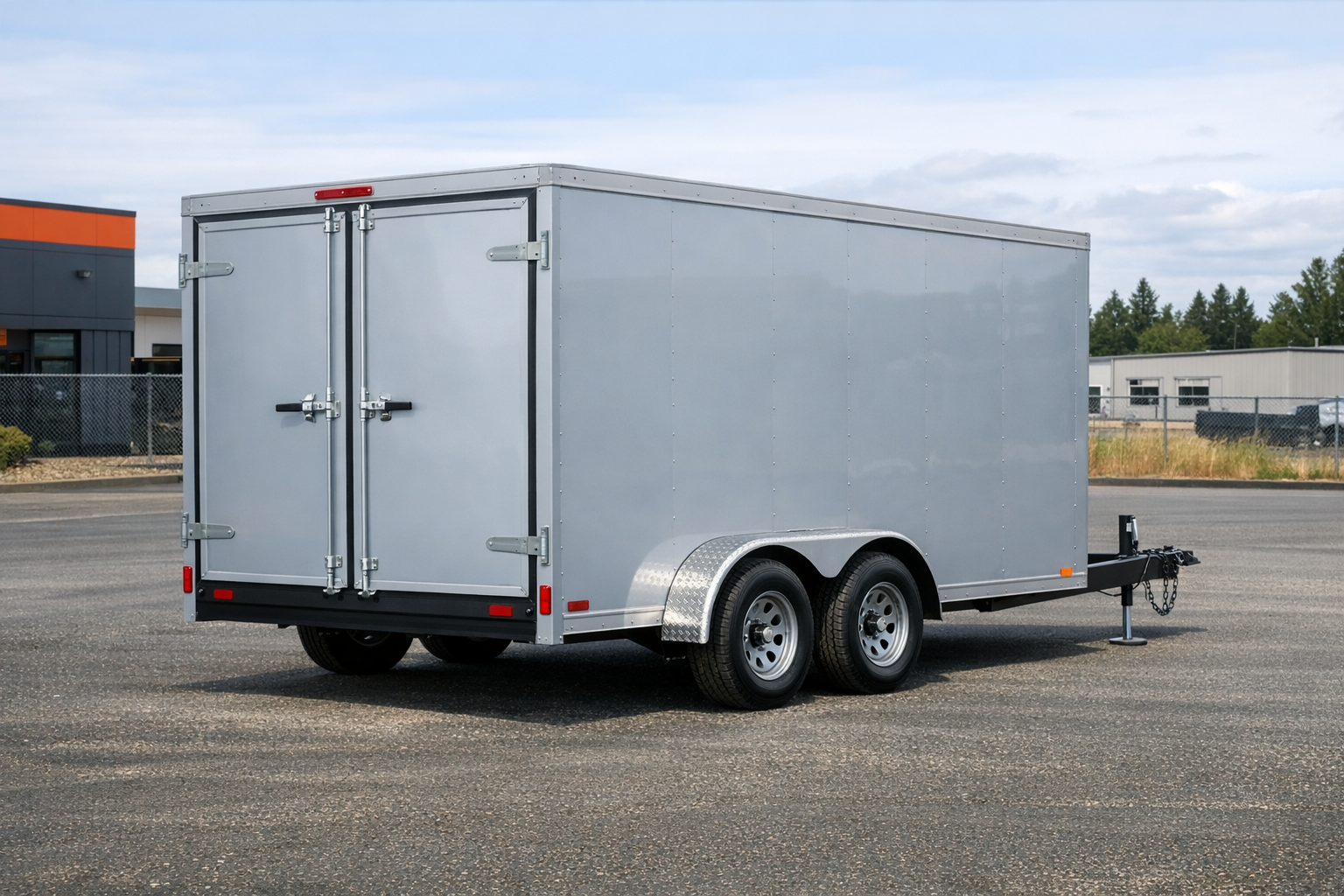
Dayspring Trailers’ parts department carries more than 2,000 parts and accessories in its showroom and online store. Its listed categories include trailer electrical parts, axles, brakes, wheels and tires, jacks, ball mounts, tie-down equipment, lighting, batteries, and other trailer accessories. Confirm current stock and pickup availability before making a trip, since inventory can change.
Use local help when the fit is uncertain
A local review is especially helpful when the original part has no readable label, the trailer has been modified, or several previous repairs have changed the setup. Bring clear photos of the mounting area and connections, plus measurements and any information from the trailer plate. If possible, bring the removed part without discarding related hardware.
Ask the dealer to identify what must match before you buy: dimensions, mounting pattern, electrical connection, axle or brake specifications, weight rating, and included hardware. Manufacturer documentation should remain the final reference for technical compatibility, but a knowledgeable parts team can help you identify which details to verify and which product information is missing.
Consider installation and follow-up support
Some parts are simple replacements. Others affect braking, wheels, axles, wiring, hitch connections, or the way the trailer carries a load. If installation requires specialized tools, adjustments, testing, or access to hidden wiring, the part price is not the entire project. Ask what installation involves and whether the work should be handled by a qualified trailer service professional.
Dayspring Trailers’ service department lists support for wheel bearings, trailer wiring, lighting, axles, brake service, hitches, brake controllers, wheels and tires, and other trailer repairs and upgrades. If you buy a part elsewhere, you can still ask what information the service team needs before discussing the work. Do not assume a service department will install an unverified or incompatible part without review.
Balance urgency against the cost of a wrong part
Online ordering may be attractive when the trailer is parked and the repair is not urgent. Local pickup becomes more valuable when a work trailer is needed for a scheduled job, a failed light affects safe use, or a replacement is required before a trip. Ask about actual availability rather than relying on a website label that may not reflect current inventory.
For example, an owner replacing a clearly labeled cargo light may order online after matching the connector, dimensions, voltage, and return terms. Another owner replacing an unfamiliar brake component may save time overall by bringing the old part and axle information to a local dealer first. The second option may cost more upfront if installation is added, but it can reduce the risk of repeated shipping, incorrect fit, or an unfinished repair.
Use a simple buy-online or buy-local decision
Choose online buying when you can answer all of these questions: What is the exact part number or specification? Does it match the trailer and surrounding system? Are the rating and dimensions correct? Is the return process clear? Can the trailer safely wait for delivery? If any answer is no, local assistance is usually the more practical starting point.
Before asking for help, prepare a short parts brief. Include the trailer make and model, the part being replaced, measurements, photos, labels, the intended use, and when the trailer is needed. Then ask for a specific review rather than a general “What do I need?” If a part is not in stock, ask whether an equivalent is actually compatible, whether it can be ordered, and whether pickup or installation is available. For local owners, the Dayspring Trailers parts department is a useful next step when you want online convenience with access to in-person guidance.
Trailer Parts Buying FAQ
Is it cheaper to buy trailer parts online?
Online shopping may make comparison and delivery more convenient, but the lowest listed price is not the full cost. Include shipping, return shipping, restocking terms, installation, and the cost of correcting a wrong order. Compare the complete purchase rather than the item price alone.
How can I confirm that an online trailer part will fit?
Match the manufacturer part number or specifications with your trailer information and the existing component. Check dimensions, mounting points, connectors, ratings, and related system requirements. If the listing does not provide enough information, contact a parts professional or consult the trailer and component manufacturer before ordering.
When should I buy trailer parts from a local dealer?
A local dealer is a strong choice when the part is safety-related, the original component is hard to identify, the trailer has been modified, the repair is urgent, or installation may be needed. Bring photos, measurements, the old part, and trailer identification information for a more useful review.
Can I order trailer parts online and pick them up locally?
Dayspring Trailers states that its parts operation offers products through an online store, with in-store pickup when available. Confirm current inventory and pickup arrangements before traveling, because availability can change.
Should I have trailer parts installed by a professional?
Simple, clearly matched replacements may not require professional installation, but parts involving brakes, axles, wheels, bearings, hitches, wiring, or load-bearing connections deserve careful review. Ask what adjustment or testing is required and whether the part has been verified for your trailer before installation.