

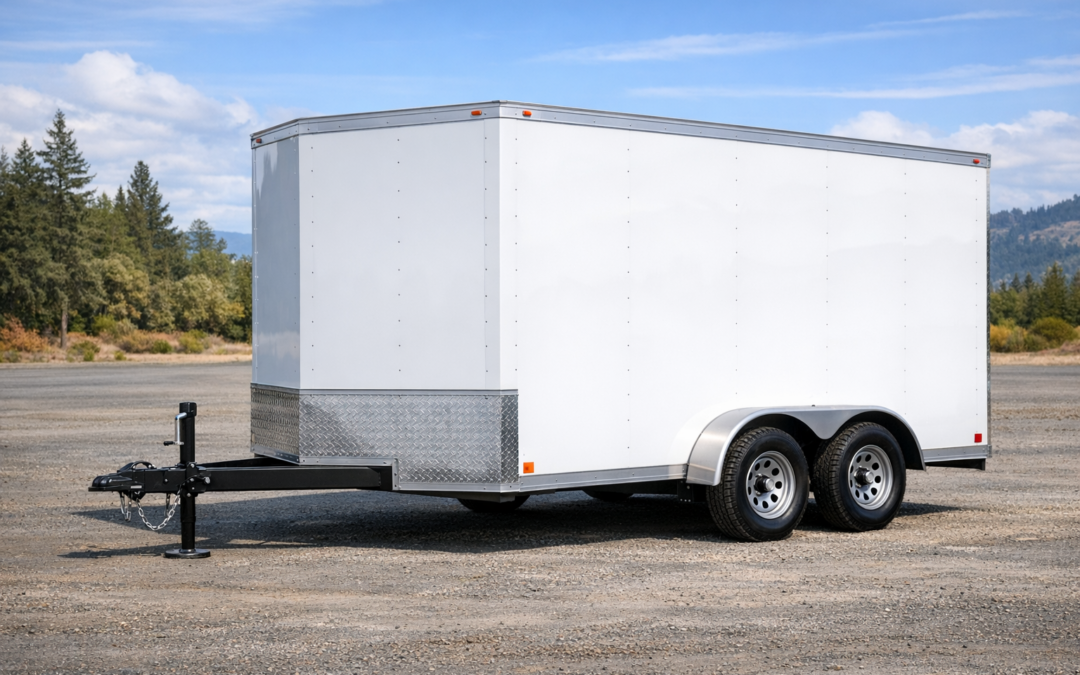
How to Match Trailer Size and Payload to Your Tow Vehicle
The right trailer is not simply the largest one your vehicle can pull. You need to compare the trailer’s loaded weight and tongue weight with your vehicle’s tow rating, payload limit, hitch rating and other information supplied by the manufacturer. The trailer’s GVWR, empty weight and expected cargo all matter.
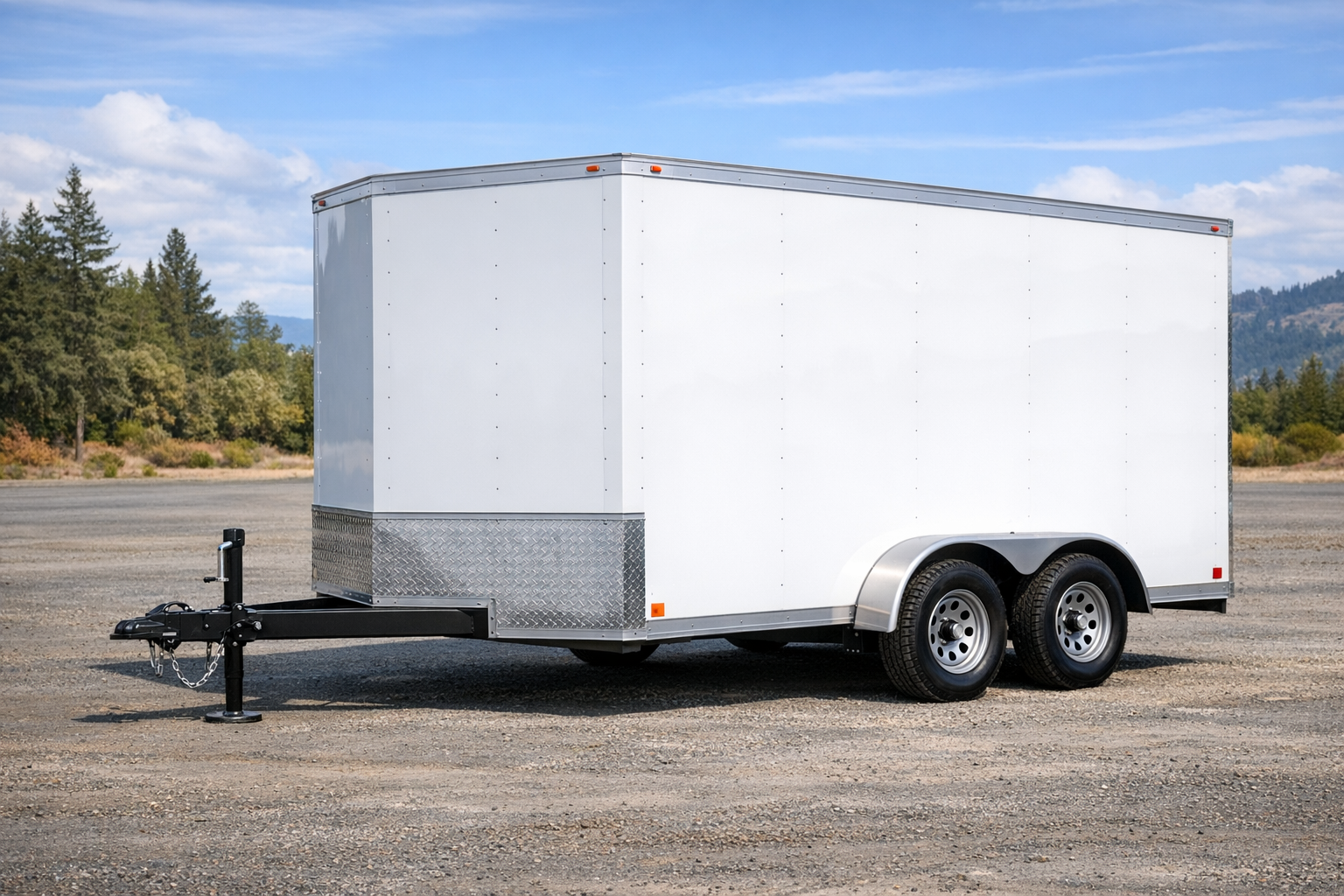
Start by collecting the numbers from your vehicle’s owner’s manual, door-jamb label and hitch information, then compare them with the trailer’s VIN plate and current manufacturer specifications. If the numbers do not clearly work together, pause before buying. Dayspring Trailers in Gresham can help you compare trailer types, features and ratings for the job you have in mind.
Gather the Numbers Before You Shop
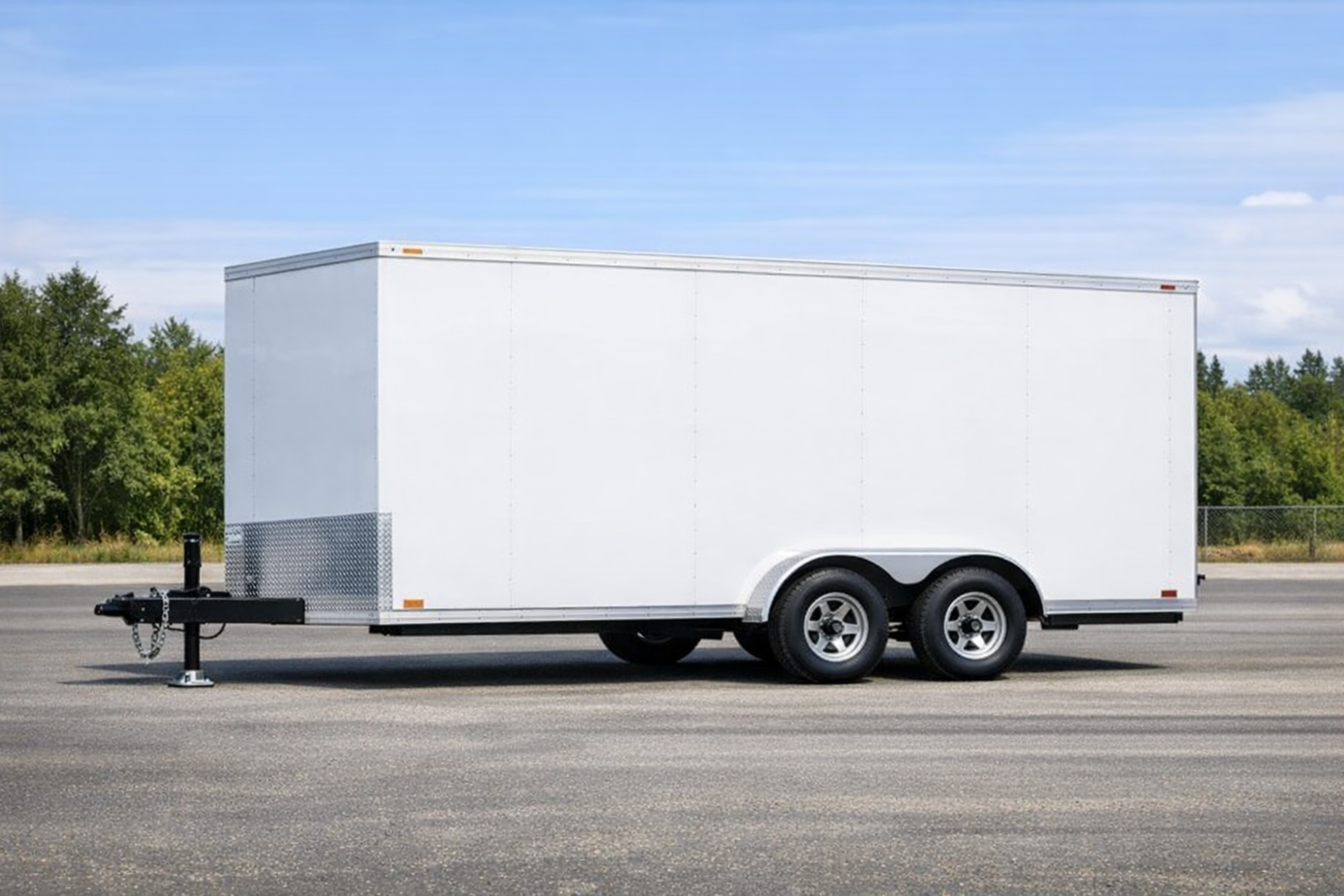
Trailer size can be misleading. Two trailers with similar outside dimensions may have different empty weights, axle ratings, cargo capacities or equipment. A useful comparison begins with the exact trailer configuration, not only a general description such as “7×14 utility trailer” or “enclosed cargo trailer.” Write down the ratings for the specific trailer you are considering and use its expected loaded condition for the final check.
Build a tow-vehicle worksheet
Record the vehicle’s maximum tow rating and, if provided, its combined gross weight rating. Also note the vehicle’s curb or empty weight only as a reference; the more important limit for people and cargo inside the vehicle is the payload rating shown on the door-jamb label or in the owner’s manual. That payload must cover passengers, tools, luggage, accessories and the trailer’s tongue weight.
Then check the hitch receiver, ball mount and coupler requirements. These components have their own ratings and may not match the vehicle’s maximum tow rating. Confirm the required ball size, hitch class, wiring and braking equipment using the vehicle and trailer manufacturers’ instructions. Dayspring’s trailer parts department carries hitches, ball mounts, brake controllers, weight-distribution and sway-control equipment, but the correct choice still depends on your specific ratings.
Read the trailer’s identification plate
Find the trailer VIN plate or manufacturer label and record its GVWR, axle ratings, tire information, empty or unloaded weight and stated cargo capacity. GVWR is the maximum permitted loaded weight for that trailer. It includes the trailer itself, cargo, added equipment and other weight carried by the trailer. Do not treat the cargo rating as a second amount that can be added on top of GVWR.
Measure the load you actually expect to carry, including ramps, toolboxes, spare tires, tie-down equipment and accessories. An enclosed trailer may gain considerable weight from shelving, cabinets or a heavier ramp door. A utility trailer may carry a dense load even when it does not look full. Ask for current specifications when a listing does not show the numbers clearly.
Separate the limits that are easy to confuse
Tow rating answers how much the vehicle is rated to pull under the manufacturer’s stated conditions. Payload answers how much weight the vehicle can carry, including people, cargo and the portion of trailer weight resting on the hitch. Tongue weight is that portion transferred to the vehicle, so it reduces the remaining payload available for passengers and gear.
The trailer’s GVWR is a trailer limit, not permission to exceed the vehicle’s tow or payload ratings. The hitch receiver, ball mount, tires, axles and braking system also need to be appropriate for the loaded setup. A weight-distribution or sway-control system may improve handling when properly specified, but it does not raise the vehicle’s published ratings. When any required number is missing, use the owner’s manual, door label, hitch documentation and trailer VIN plate rather than guessing.
Compare the Loaded Combination, Not an Empty Trailer
Once you have the numbers, compare the complete combination as it will travel. Consider the vehicle occupants, cargo inside the vehicle, trailer equipment and the load placed on the trailer. Leave room for normal changes instead of choosing a setup that only works when every item weighs exactly what you estimated.
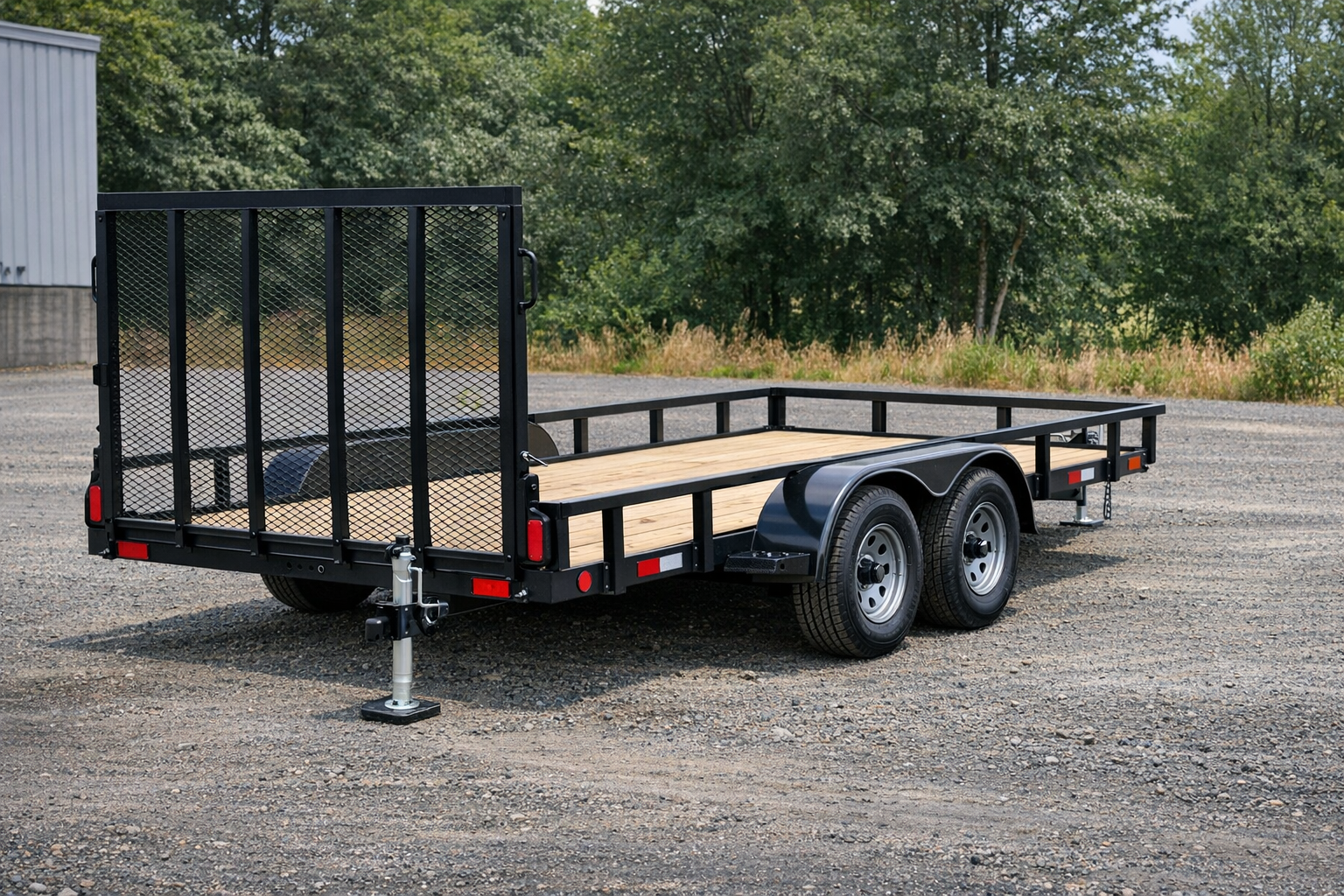
A practical review should also consider how the trailer will be used. Short trips with light equipment may call for a different layout than frequent hauling of machinery, vehicles, building materials or recreational gear. Dayspring Trailers offers utility, flatbed, dump, enclosed cargo and car hauler trailers, so the useful question is not only “Can my vehicle pull this?” but also “Will this trailer carry my normal load without using every limit?”
Use a simple loaded-weight check
For a first estimate, add the trailer’s empty weight to the weight of everything you plan to carry. Compare that expected loaded weight with the trailer GVWR and with the vehicle’s tow rating. Separately estimate tongue weight and compare it with the vehicle’s remaining payload and the hitch system’s rating. Use the manufacturer’s guidance for the appropriate tongue-weight range rather than relying on a universal percentage.
Hypothetical example: Imagine a vehicle with a manufacturer-listed tow rating that appears sufficient for a trailer. The trailer itself weighs 2,400 pounds, and the planned cargo weighs 1,600 pounds. That creates an estimated loaded trailer weight of 4,000 pounds before any later additions. The buyer would still need to check the trailer GVWR, the vehicle’s actual remaining payload after passengers and gear, the hitch rating and any applicable combined rating. The arithmetic is only a starting point, not approval of that combination.
Watch for rating conflicts
A common conflict occurs when the trailer’s GVWR is higher than the vehicle can tow, even though the trailer is usually loaded lightly. The vehicle must be matched to the applicable rating and the way the manufacturer defines it; do not assume an occasional light load solves every rating issue. Another conflict occurs when the trailer weight fits the tow rating but its tongue weight, passengers and equipment exceed the vehicle’s payload.
There can also be a conflict between the vehicle hitch and the trailer. For example, a vehicle may have a high published tow rating while the installed receiver or ball mount has a lower limit. Tires, axles, brakes and couplers deserve the same attention. If the numbers disagree, choose a lighter trailer or a vehicle and hitch setup with ratings that support the intended use.
Check fit, handling and the actual loading plan
Weight ratings are essential, but size and balance affect whether the trailer is practical. Confirm that the cargo fits between the rails or inside the walls, that the ramp and door openings are large enough, and that the trailer leaves room for secure tie-downs. Place heavy cargo as directed by the trailer manufacturer and keep it secured so it cannot shift during travel.
Think about maneuvering, storage and the route as well. A longer or wider trailer may be useful for a vehicle, equipment or materials, but it may be harder to park or position at the job site. If you are comparing an enclosed and open design, the existing guide on choosing between enclosed and open trailers can help you weigh weather protection, access and loading routine after the weight check is complete.
Trailer Size and Payload Matching FAQ
Is a trailer’s GVWR the same as its empty weight?
No. Empty weight is what the trailer weighs before the planned cargo and added equipment. GVWR is the maximum loaded weight allowed for that trailer. Compare the empty weight plus your expected load with the GVWR, then compare the loaded result with the tow vehicle’s ratings.
Does payload include trailer tongue weight?
Yes. Tongue weight is carried by the tow vehicle, so it uses part of the vehicle’s payload. Account for passengers, tools, luggage, accessories and tongue weight together, using the vehicle’s door-jamb label and owner’s manual for the applicable limit.
Can a weight-distribution hitch increase my vehicle’s tow rating?
No. It may help distribute weight and improve handling when the vehicle, trailer and hitch manufacturer specify its use, but it does not increase published vehicle, hitch, tire, axle or trailer ratings. Check all limits before selecting the equipment.
What should I bring when asking Dayspring Trailers to help compare a setup?
Bring the vehicle year, make and model, the owner’s manual or rating information, a photo of the door-jamb label, hitch details and a description of the people, cargo and trailer you expect to use. For a trailer already selected, bring its VIN-plate information and current specifications. This gives the team useful numbers instead of only a trailer size.